
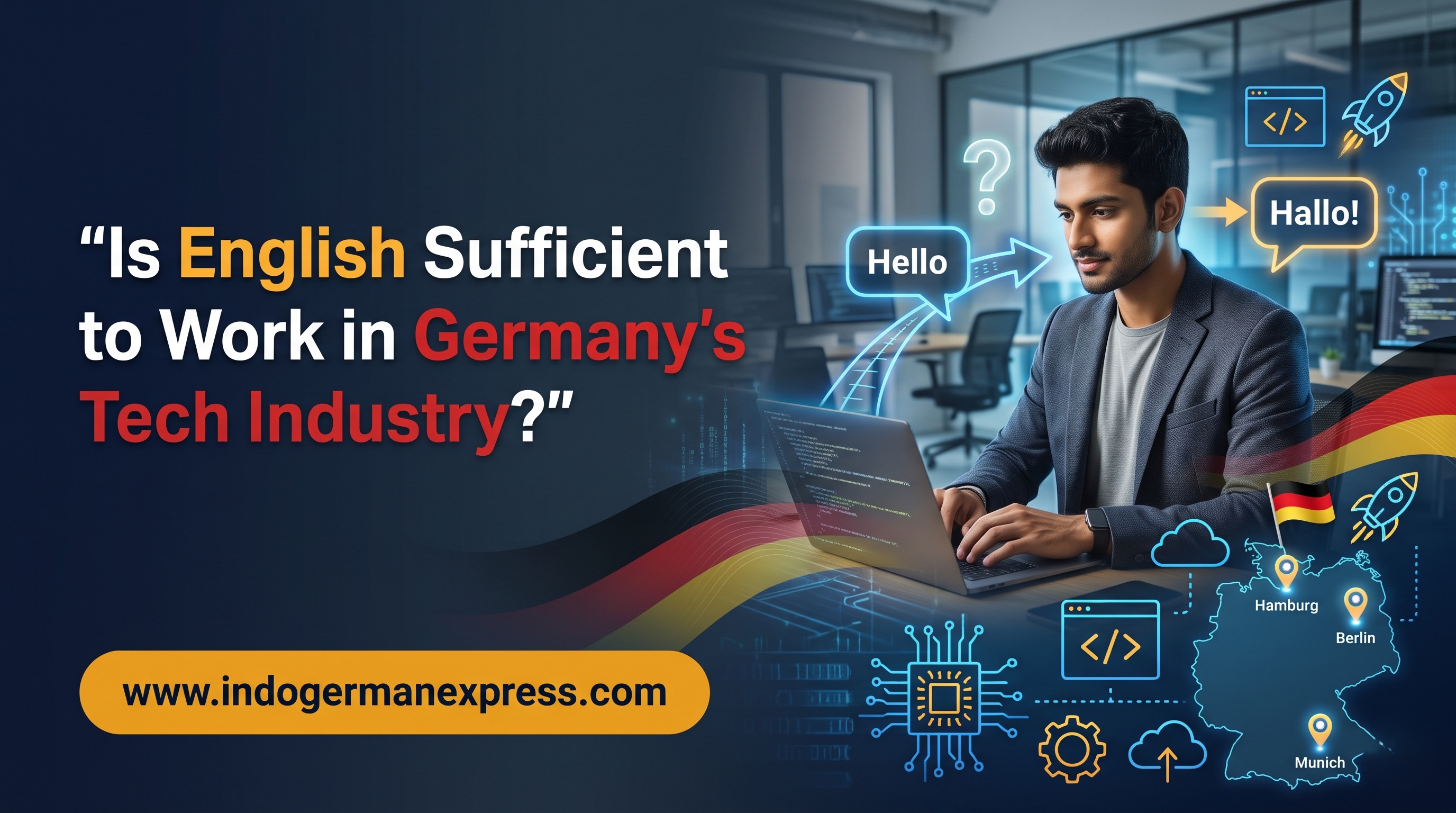
Is English Sufficient to Work in Germany's Tech Industry?
Discover insights and practical tips to accelerate your German language learning journey.
Germany has emerged as a key destination for technology professionals seeking to build international careers. Offering opportunities in software development, data science, artificial intelligence, cybersecurity, cloud computing, and IT consulting, the country draws skilled professionals from around the globe.
For international candidates, especially those from countries like India, a frequent question is whether English alone is enough to land a job in Germany's technology sector. Many professionals possess strong technical qualifications and experience but may not have begun learning German.
Fortunately, Germany's tech industry provides numerous opportunities where English serves as the primary working language. This does not mean, however, that German is entirely unnecessary. How important language proficiency is depends on the company, the job responsibilities, and the people you interact with.
Let's explore whether you can build a career in Germany's tech industry with English alone, and when learning German can give you an edge.
Why English-Speaking Opportunities Exist in Germany's Tech Industry
Germany has a robust technology ecosystem that includes multinational companies, startups, research organisations, and growing technology businesses. Many of these organisations collaborate with international teams, clients, and business partners. In these settings, English is commonly used for meetings, technical documentation, project discussions, and internal communication. Companies that hire professionals from various countries may adopt English as their shared working language.
This is especially evident in international technology companies and startups, where employees may come from different linguistic backgrounds.
For instance, a software developer on an international team may communicate with colleagues from India, France, Poland, and Germany. In such cases, English enables everyone to collaborate without requiring all employees to speak German.
So if you have relevant technical skills and professional experience, not knowing German does not automatically stand in the way of finding a job in Germany's tech industry.
Which Tech Jobs Can You Get Without Knowing German?
The chance of working in Germany with English alone is greater in certain technology roles, especially those where technical expertise matters more than direct communication with local customers.
Software Development: Software developers who work with programming languages, application development, backend systems, and web technologies may find opportunities in English-speaking settings. Many international engineering teams rely on English for documenting code, holding technical discussions, and coordinating projects.
Data Science and Data Analytics: Data scientists, data analysts, and machine learning professionals frequently work alongside international teams. Their duties may include analysing datasets, building models, preparing reports, and presenting technical findings. In some organisations, English can be enough.
Artificial Intelligence and Machine Learning: Companies that work on AI solutions, automation, and machine learning often hire professionals who possess specialised technical knowledge. English-speaking opportunities exist, especially in research-focused and international settings.
Cybersecurity: Cybersecurity professionals working in areas such as threat detection, security engineering, and infrastructure protection may find roles where technical expertise and English communication are sufficient.
Cloud Computing and DevOps: Professionals who work with cloud platforms, deployment systems, infrastructure, and automation tools can find opportunities in international technology teams where English serves as the language of daily communication.
However, these career paths are not guaranteed to be English-only. Requirements differ from one employer to another, and some positions within the same field may require German.
Do German Companies Hire Employees Who Speak Only English?
Yes, many German companies hire international professionals who do not speak German. However, it is important to distinguish between international organisations and companies that mainly operate in German.
Large multinational organisations often have diverse teams and well-established English-speaking work environments. Their recruitment processes, technical documentation, and internal communication may be carried out entirely in English. Startups in cities such as Berlin and Munich may also adopt English as their primary working language, particularly when their teams include international employees.
However, smaller German companies and traditional businesses may conduct most of their operations in German. Even if the technical team communicates in English, other departments may use German for meetings, documentation, and administrative tasks.
For instance, a software developer may be comfortable working in English within the engineering department but may need German when communicating with a local client or coordinating with a German-speaking operations team. This is why it matters to verify the actual working language of a company instead of assuming that every technology role will be offered in English.
How German Language Skills Can Boost Your Career Prospects
Although English may be sufficient to enter Germany's tech industry, learning German can broaden your job opportunities. A key benefit is gaining access to a wider range of employers. You are no longer restricted to international companies or organisations that specifically hire English-speaking professionals. You can also look into German businesses where communication in the local language is expected.
German can also strengthen your ability to work with clients. For instance, an IT consultant may need to grasp a client's requirements, explain technical solutions, discuss project timelines, and address concerns. If the client communicates mainly in German, language proficiency becomes especially valuable. Career advancement is another advantage. As professionals move into senior roles, they may take on responsibilities involving team management, client relationships, presentations, and coordination with different departments. Such responsibilities can demand stronger communication skills.
German also helps you feel more at ease with workplace culture and everyday interactions. Understanding informal conversations, team discussions, and office communication can make it easier to build professional relationships.
So German may not always be required for your first tech job, but it can grow increasingly useful as your career develops.
What German Language Level Should Tech Professionals Aim For?
If you plan to work in Germany's technology sector, you do not necessarily need to be fluent before applying for jobs.
At A1 and A2, you can handle basic everyday interactions, introduce yourself, and understand simple expressions. These levels are helpful when settling into Germany, but they are generally not sufficient for professional communication in German.
At B1, you can take part in familiar conversations, understand straightforward instructions, and explain basic work-related matters. This can serve as a helpful starting point for professionals who wish to become more self-reliant in day-to-day workplace interactions. At the B2 level, your communication becomes more adaptable. You can take part in detailed discussions, explain technical concepts more clearly, and engage with German-speaking colleagues and clients more confidently.
C1 offers advanced language proficiency and can be especially valuable for professionals moving into management, consulting, leadership, or client-facing roles. For many international tech professionals, B1 or B2 is a realistic long-term goal.
However, the level you need depends on the job advertisement and what the employer expects.
How to Find English-Speaking Tech Jobs in Germany
If you do not speak German yet, your job search should concentrate on companies and positions where English is accepted as the working language. Begin by using job portals such as LinkedIn, StepStone, and Indeed to look for technology positions. You can search with terms such as "English-speaking software developer Germany", "English-speaking data analyst Germany", or "English as working language".
Read the job descriptions carefully. Some employers state outright that English is the working language, while others require German at B1, B2, or C1 level. Do not assume a job is suitable just because the advertisement is written in English.
Research the company before you apply. Look at its website, team structure, employee profiles, and career pages to determine whether it operates in an international environment.
You should also emphasise your technical skills, professional experience, projects, and certifications in your CV. If you know German, state your actual CEFR level. If you are currently learning, you can include that information too.
Most importantly, do not limit your applications to companies based in a single city. Opportunities can be found in various parts of Germany, depending on the technology specialisation and the employer.
Typical Difficulties of Working in Germany Without Knowing German
Even though you can work in the tech sector using English, living and working in Germany without German may bring some challenges.
You might struggle to communicate with local authorities, read official letters, book appointments, or handle routine administrative tasks. These situations are not always related to your technical role, but they form part of professional and personal life in Germany. In the workplace, you may also miss informal chats among colleagues when they switch to German during lunch breaks or team discussions. This can sometimes make it more difficult to build relationships beyond your immediate international team.
Changing jobs is another challenge. Your current employer may work entirely in English, but another company might require German for similar duties. Knowing German can therefore give you more flexibility when looking into new opportunities. Learning the language step by step can help you handle these situations without having to postpone your career plans.
How Can You Learn German While Pursuing a Tech Career?
For working professionals, finding time to learn another language can be hard. However, you don't need to spend several hours a day studying German in order to make progress.
Begin by establishing a consistent learning routine. Even 20 to 30 minutes of focused practice can help you build your vocabulary and comprehension over time.
Try to learn German expressions connected to your professional field. Tech professionals can practise explaining their projects, discussing technical issues, giving progress updates, and communicating during meetings. Listening practice matters just as much. German podcasts, interviews, and videos can help you get used to different speaking styles and improve your comprehension of the language.
Structured online courses can also make the learning process more organised. Indo German Express provides online German language courses featuring interactive sessions, trainer support, and assistance for learners getting ready for recognised Goethe and telc examinations. The goal should be to build practical communication skills that you can steadily apply in professional as well as everyday situations.
Conclusion
English may be sufficient to land a job in Germany's tech sector, especially at international companies, startups, and technical roles where English serves as the main working language. Professionals in software development, data science, cybersecurity, AI, and cloud computing can find opportunities even without prior German language skills. Still, depending solely on English may narrow your options among employers and make some workplace interactions harder. Learning German can open up further opportunities, help you communicate with local teams and clients, and prepare you for long-term career advancement.
If you intend to work in Germany's technology sector, concentrate on building solid technical skills while steadily improving your German. You don't need to pick between advancing your career and learning the language. Both can move forward at the same time.
Ready to Start Your German Journey?
Join thousands of students learning German with Indo German Express
Explore Our Courses